Start with the consequence of an outage
List the processes affected when utility power is lost. Separate life-safety requirements, process protection, production continuity and convenience loads. These categories can have different electrical, operating and regulatory requirements.
A factory does not necessarily need to restart every machine at once. Document which processes must remain running and which can wait.
Build a load priority map
For each essential load, record the acceptable interruption, starting method, running requirement and restart sequence. Pumps, refrigeration, compressed air and control systems can have different dependencies.
| Process | Question for the project team |
|---|---|
| Controls and IT | Is an uninterrupted supply required? |
| Motors and compressors | Can starts be sequenced? |
| Refrigeration | What interruption can the process tolerate? |
| Production lines | What is the safe shutdown and restart procedure? |
A generator and a UPS perform different functions. If a load cannot tolerate the transfer interruption, review the whole power architecture rather than assuming the generator removes that interruption.
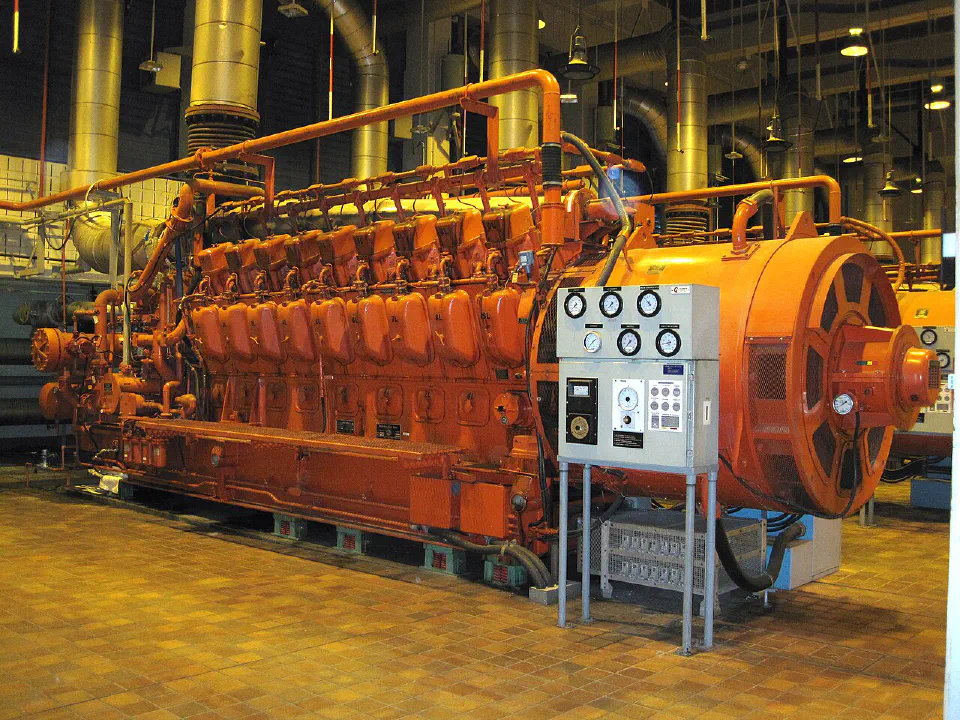
A diesel generator at Montreal's wastewater treatment plant. The engine, alternator and overhead exhaust runs show the scale of an indoor installation.
Photo: Jean-Daniel Drapeau-Mc Nicoll; colour edit by Soerfm · CC BY-SA 3.0Define the installation scope
Describe available space, access for delivery, service clearances, ventilation, exhaust discharge and fuel arrangements. Identify the transfer scheme and who will coordinate the protection settings.
Keep these items in the project brief even when a contractor will complete the detailed design.
Ask for a system proposal
Have the supplier or engineer review the load schedule, starting sequence and site constraints together. Record assumptions about load shedding and future expansion. Confirm the required acceptance tests and operating documentation.
Prepare the procurement checklist before comparing system quotations.
Sources & scope
- Cummins — T-030 Generator Set Application Manual · §3.1–3.2 Load schedules and the effect of different loads on selection. Issue 9, February 2015; not represented as the latest edition.
General procurement guidance. Worked examples are illustrative; final selection requires the selected manufacturer's documentation and a project-specific engineering review.