After a routine check or planned test, record which generator was involved, when and under what operating conditions it was checked, what was done, what was observed, and what still needs follow-up. Identify who is responsible for the entry and keep open faults visible until their status is updated. Use the generator manual and site procedure to determine which checks and readings apply. The log documents the work and findings; it does not replace technical instructions.
Identify the generator and the activity
Give each entry enough context for another person to identify the unit and understand what happened. Record:
- Generator identifier and site or location; include the model or serial number if needed to distinguish similar units.
- Date and time of the check or test.
- Name or role of the person who performed it.
- Activity type, such as routine check, planned test, maintenance, repair, or follow-up.
- Operating context, such as whether the unit was stopped or running, and the hour-meter reading where available.
- For a planned test, its purpose or scope and any relevant operating conditions specified by the site procedure.
A Cummins operator manual for the equipment it covers lists the date, hour-meter reading, and maintenance or service performed as maintenance-record fields. It also says that recording maintenance and hours run helps keep maintenance regular. These are examples of traceable log information, not a universal form for every generator or site. Cummins operator manual
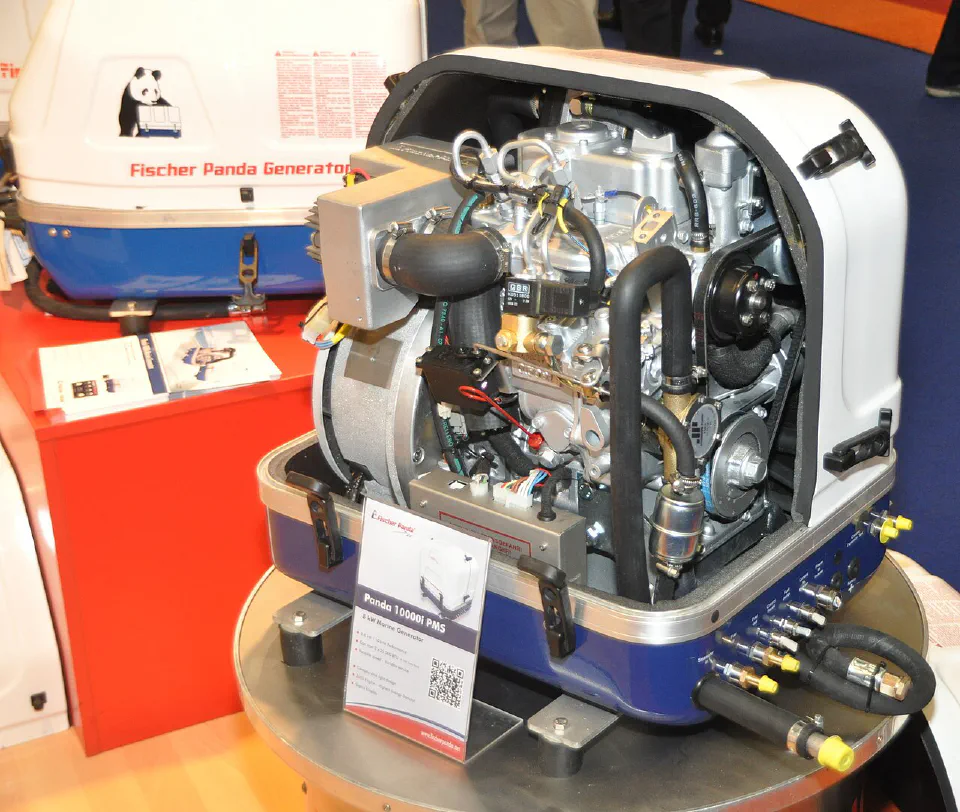
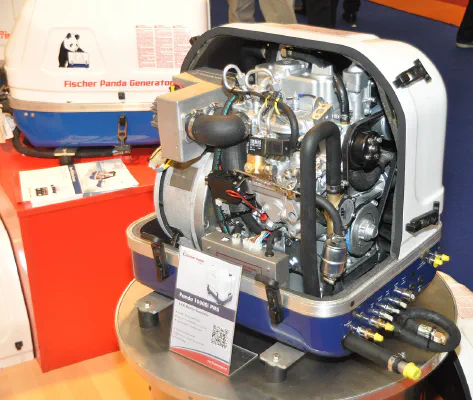
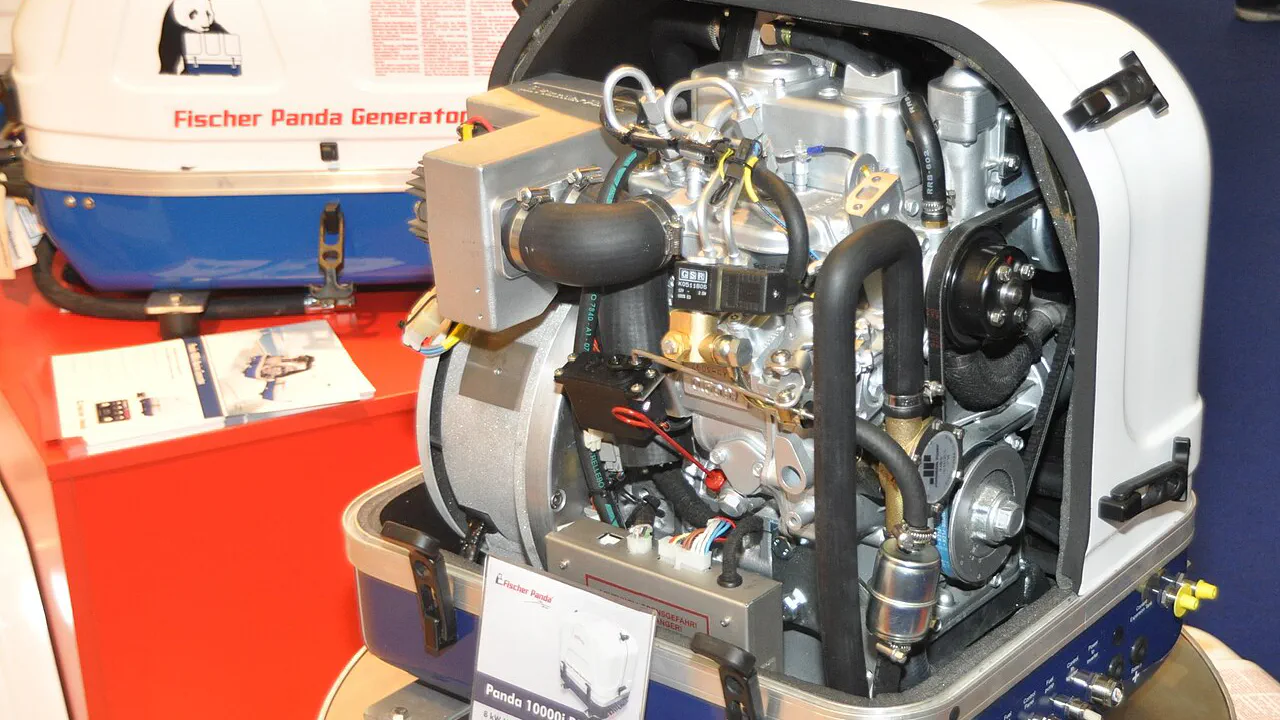
A compact marine generator on display at METS 2011, Amsterdam. The opened enclosure exposes the engine and its connections.
Photo: S.J. de Waard · CC BY-SA 3.0Document checks, findings, and readings
List the checks or test steps actually completed. Avoid entries such as “checked” or “passed” without explaining what was checked and what the result was. Where a procedure calls for readings, record the value, units, and relevant operating context. Record alarms or status indications as shown, and describe notable observations plainly.
Follow the applicable equipment manual and site procedure for what to inspect, how to take readings, and how to interpret results. Do not use a log entry to imply that a condition is acceptable unless the responsible procedure or person supports that conclusion. For a planned test, record the stages and conditions that were actually covered. A result supports conclusions only about the work performed and evidence recorded.
If a reading or check could not be completed, state that it was not obtained. Note the reason if known and whether it needs to be repeated or reviewed. A blank field can be ambiguous: it may mean “not applicable,” “not checked,” or simply “not recorded.” Make the status explicit.
Keep faults, deferred checks, and uncertainty visible
Describe an unsatisfactory condition factually: what was observed, when it occurred, and which check or test it relates to. Record the displayed alarm or indication rather than guessing at its cause. Separate an observed fact from a suspected explanation, and identify unresolved questions as unresolved.
If a check was deferred, incomplete, or not attempted, record that status and the reason if known. Identify what evidence or action is still needed. Do not treat missing evidence as a normal result, or mark a fault as resolved merely because it was passed to another person.
Assign follow-up and record closure
For each open item, record a clear description or reference, the person or role responsible for follow-up, and a due date or review point under the site’s process. Include the next action or evidence required and the current status. If responsibility changes, update the record so the next reviewer knows who owns the item.
When an action is completed, add the completion date, who performed or reviewed the work, and what was done. Note any relevant parts replaced and whether a follow-up test or check was completed, recording its outcome. Use the manufacturer’s guidance and site procedure to determine what verification is appropriate. If the issue is still unresolved, leave it open and carry it forward with an updated status.
Prepare the next readiness review
At handover, make it straightforward to find the latest check or test, the current hour-meter record, outstanding faults, deferred checks, action owners, and evidence still awaited. Link related maintenance or test records if the site’s record system allows it. Add dated updates rather than obscuring or replacing earlier findings, so the history remains understandable.
Before handing over, ask whether someone who was not present can tell what was done, what was found, what remains uncertain, and who is responsible for the next action. If not, clarify the entry before treating it as complete. A clear handover shows what was checked, what remains open, and who will take the next action.
Sources & scope
General procurement guidance. Worked examples are illustrative; final selection requires the selected manufacturer's documentation and a project-specific engineering review.