The useful starting point
Write one requirement that every supplier receives. It should state the essential loads, the operating pattern, the site conditions and the scope of supply. A quotation is only comparable when those assumptions match.
The examples below demonstrate procurement preparation. They are invented teaching examples, not a customer installation, a product recommendation or a generator sizing result.
A worked requirement
Consider a factory requesting standby power for essential operations. The assumed electrical system is 400 V, 50 Hz, three-phase, with an outdoor installation at 40°C and 500 m altitude. These are example inputs to disclose, not universal design conditions.
| Essential load | Running input | Starting information | Priority |
|---|---|---|---|
| Process-water pump | 22 kW | Starting method and starting current to confirm | Start first after transfer |
| Ventilation fans | 15 kW | Motor details and sequencing to confirm | Start after pump |
| Lighting and controls | 8 kW | Driver, UPS and control details to confirm | Remain available as required |
| Packing line | 12 kW | Drive details and allowable interruption to confirm | Restart after essentials |
| Total running input | 57 kW | Not a generator rating | Engineer to review the complete sequence |
The arithmetic total is 22 + 15 + 8 + 12 = 57 kW. It does not specify motor starting, transient response, harmonics, site derating or an appropriate duty rating. Those are unresolved questions for the proposed set and installation.
Ask the supplier to identify the proposed engine, alternator and controller, provide original data sheets and explain the load and site assumptions used. Attach the actual motor and equipment information before a final selection.
Compare two offers
Use this illustrative comparison to expose missing scope. The entries are teaching examples, not real supplier quotations.
| Check | Offer A states | Offer B states | What the buyer does next |
|---|---|---|---|
| Power and duty | 100 kVA standby, reference conditions attached | 100 kVA, duty unstated | Request equivalent duty definitions and original data sheets |
| Site-rated output | Site conditions acknowledged; starting review pending | Reference conditions only | Request confirmation for the stated site and complete load sequence |
| Transfer equipment | ATS included, model stated | ATS excluded | Compare the complete delivered scope, not only the generator price |
| Testing | Test procedure and report identified | “Factory tested” only | Agree the procedure, records and acceptance criteria |
| Support | Named commissioning scope and warranty exclusions | Parts warranty only | Clarify labour, travel, local service and exclusions |
Do not pick a winner from this table. Neither offer can be accepted until the open technical and commercial questions are resolved. A low price can reflect excluded work; a higher power label can reflect a different rating basis.
Check the evidence
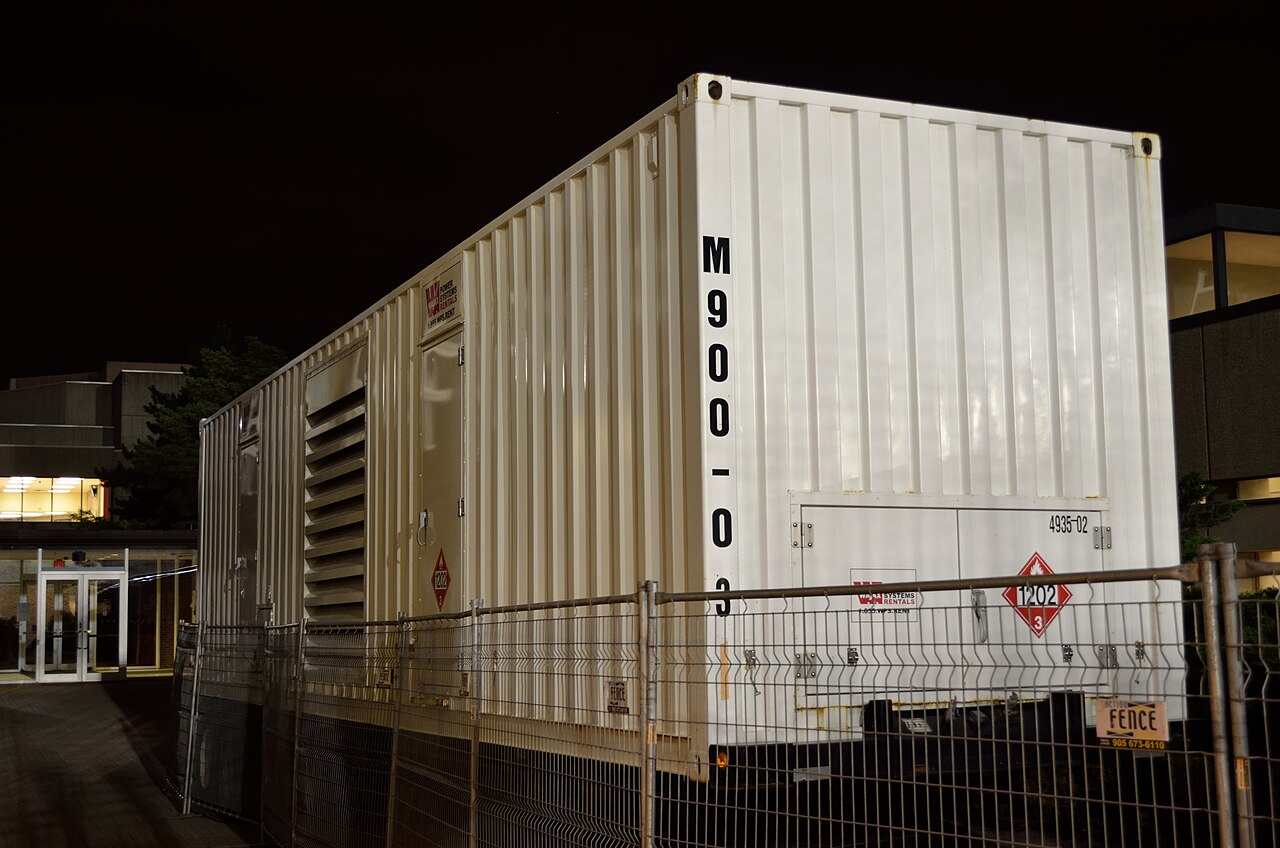

Request the manufacturer’s model-specific rating sheet, engine and alternator identification, controller and ATS models, site assumptions, enclosure details, testing scope and warranty terms. Keep each document beside the corresponding quotation field.
When inspecting an equipment photograph or nameplate, check that the model and rating information corresponds to the quoted data sheet. A photograph alone cannot establish condition, conformity or suitability. Ask for readable originals when a label is missing or unclear.
Send the same brief
Send the same revision of the requirement to each supplier. Keep a dated question log, ask for written responses to exclusions, and update all bidders when the scope changes.
Build and export your project brief, then download the detailed RFQ worksheet. Attach a load schedule and the equipment documents that support it.
Sources & scope
- Cummins — T-030 Generator Set Application Manual · Preliminary Design Checklist and §3.1–3.2 Load information, installation conditions and scope preparation. Issue 9, February 2015; not represented as the latest edition.
General procurement guidance. Worked examples are illustrative; final selection requires the selected manufacturer's documentation and a project-specific engineering review.